Introduction
We understand that preparing a parastas often comes at a time when the pain of loss is still raw. Whether you are organising the 40-day, one-year, or an annual memorial service, we want to offer you a complete and clear guide, so that you can focus on what truly matters — being close to family and preserving the memory of your loved one.
Coliva and colaci are more than simple culinary preparations. They carry a profound spiritual meaning in Romanian Orthodox tradition: the wheat grain symbolises death and resurrection, while the round shape of the colaci evokes the continuity of life and the unbroken bond between those who have passed and those who remain. These elements are present at every parastas, from the three-day service to the annual one, and are part of how the community expresses its care and respect for the departed.
In this article, we will go through the Orthodox meaning of coliva and colaci together, a detailed step-by-step traditional coliva recipe, the preparation of parastas colaci, the contents of pomana packages with regional variations, and other traditional elements that complete the memorial meal. This article is intended for everyone who wishes to honour the tradition with dignity — whether doing so for the first time or seeking to rediscover customs passed down from generation to generation.
Why coliva is prepared for a parastas — the Orthodox meaning
Coliva is prepared for a parastas because, in Orthodox Christian tradition, the wheat grain symbolises the death of the body and the resurrection of the soul, just as wheat "dies" in the earth to be reborn as a new plant. It is the most important ritual dish at any memorial service, and bringing coliva to church for a blessing is a gesture of prayer for the soul of the departed.
The symbolism of wheat — death and resurrection
The symbolic foundation of coliva is found directly in the Gospel of John (12:24): "Unless a grain of wheat falls into the earth and dies, it remains alone; but if it dies, it produces much grain." This verse underlies the entire tradition of coliva in Orthodoxy.
Every ingredient in coliva carries a meaning:
| Ingredient | Spiritual meaning |
|---|---|
| Boiled wheat | Death and resurrection — the grain "dies" in water and is reborn soft |
| Walnuts | The human body — the hard shell protects the kernel (the soul) |
| Sugar / Honey | The sweetness of eternal life and paradise |
| Rum essence | The fragrance of prayer rising to heaven |
| Breadcrumbs / Biscuits | The earth in which the body rests |
| Cocoa | The earth, referring to "from earth we were born and to earth we shall return" |
Coliva is prepared at every parastas: at 3 days, 9 days, 40 days, 6 months, one year, and at every subsequent annual memorial. It is also present at Moșii (the Ancestors' Saturdays) and at feast days dedicated to the remembrance of the departed.
How coliva is blessed at church
Coliva is not offered before it has been blessed by the priest. The traditional process is as follows:
- Preparation at home — the coliva is prepared the day before or on the morning of the parastas.
- Decoration — a cross is formed from icing sugar on the surface, sometimes accompanied by the initials of the deceased.
- Transport to church — the coliva is carried on a clean platter, accompanied by a lit candle.
- The memorial service — the priest recites the prayers of remembrance and blesses the coliva, the colaci, and the other offerings.
- Distribution — after the service, the coliva is shared out at the cemetery or at home to all those present, together with the colaci and the pomana packages.
It is important to note that, although Orthodox tradition is predominant in Romania, families who do not belong to this faith may adapt these customs or choose secular forms of commemoration, while preserving the spirit of respect and remembrance.
The traditional coliva recipe — step by step
The traditional coliva recipe uses boiled wheat, walnuts, sugar, and flavourings, and preparation takes around 3-4 hours (including the time needed to boil the wheat). It is an accessible recipe that does not require advanced culinary experience — just patience and care.
Ingredients and quantities
For a medium-sized coliva (10-15 servings):
| Ingredient | Quantity | Notes |
|---|---|---|
| Wheat for coliva | 500 g | Available at markets or shops selling traditional products |
| Ground walnuts | 200 g | Freshly ground, for better flavour |
| Icing sugar | 200 g | For mixing into the base and for decoration |
| Caster sugar | 100 g | For boiling together with the wheat |
| Breadcrumbs / crushed biscuits | 150 g | Sponge fingers or plain biscuits |
| Cocoa | 2-3 tablespoons | Optional, for the top layer |
| Rum essence | 2 teaspoons | Or a small amount of natural rum |
| Vanilla essence | 1 teaspoon | Optional |
| Grated lemon zest | from 1 lemon | Optional, for freshness |
| Turkish delight (rahat) | 100 g | Cut into small cubes, for decoration and flavour |
| Sweets / sugared almonds | for decoration | Optional |
| Salt | a pinch | For boiling the wheat |
Preparation steps
Step 1: Preparing the wheat (the evening before) Wash the wheat in several changes of water, removing any impurities. Leave it to soak in cold water overnight (8-12 hours). This step is essential for reducing the boiling time.
Step 2: Boiling the wheat Drain off the soaking water. Put the wheat in a large pot, add fresh water (twice the volume of the wheat), a pinch of salt, and the caster sugar. Simmer over medium-low heat for 1.5-2 hours, until the grains are soft but not falling apart. Add more water along the way if needed. The grains should be easy to chew but not mushy.
Step 3: Cooling and draining After boiling, drain the wheat thoroughly and spread it out on a clean tea towel or a tray, leaving it to cool completely. Damp wheat will make the coliva sticky.
Step 4: Mixing the base In a large bowl, combine the cooled wheat with the ground walnuts, the breadcrumbs (or crushed biscuits), the rum essence, the vanilla essence, and the lemon zest. Mix gently, folding from the bottom up, so as not to crush the grains. Add the cubed Turkish delight and mix again.
Step 5: Shaping the coliva Place the mixture on a round or oval platter. Shape it into a slightly domed, well-compacted form with smooth edges. Cover the surface with an even layer of fine breadcrumbs or crushed biscuits.
Decorating the coliva — the sugar cross
Decorating the coliva carries a particular meaning. The surface is covered with icing sugar sifted evenly, and a large cross is drawn on top using cocoa or sweets. Optionally, you can add:
- The initials of the deceased
- The date of birth or death
- Coloured sweets arranged decoratively around the cross
- Cubes of Turkish delight around the edges
Some families choose a simple style, with just the icing-sugar cross and cocoa, while others create more elaborate decorations. Both approaches are equally acceptable — what matters is that the sign of the cross is present.
Did you know? Modern families complement these traditions with digital memorials — a memory page on Kinmory, accessible on any memorial day, where relatives from around the world can add photographs and memories.
Parastas colaci — meaning and preparation
Parastas colaci are traditional round loaves that symbolise the continuity of life and the eternal cycle of existence. Their circular shape, with neither beginning nor end, represents the unbroken bond between the world of the living and the world of the departed.
Why the round shape — the symbolism of continuity
The round shape of the colaci is no accident. In Orthodox tradition, the circle symbolises:
- Eternity — without beginning or end, just like the soul
- The continuity of life — the cycle of birth, death, and resurrection
- The sun — the divine light that never goes out
- The unity of the family — the circle that holds the living and the dead together
Colaci are made from a simple bread dough (flour, water, yeast, salt, a little sugar, and oil), shaped into rounds, and baked in the oven. Some housewives also add milk or egg to the dough, for a fluffier colac. The sign of the cross can be imprinted on the surface, either with a knife or with a special seal (known as a "prosphora" or "colac stamp").
How many colaci are made for a parastas
The number of colaci varies according to the type of parastas and local tradition:
| Type of parastas | Traditional number of colaci | Notes |
|---|---|---|
| 3-day parastas | 1-3 colaci | Some areas prepare just 1 colac |
| 9-day parastas | 3 colaci | With a candle in the main colac |
| 40-day parastas | 3-7 colaci | The most important parastas; some families make 7 colaci |
| 6-month parastas | 3 colaci | |
| 1-year parastas | 3-7 colaci | Just as important as the 40-day parastas |
| Moșii / Ancestors' Saturday | 1-3 colaci | Taken to church or to the cemetery |
It is important to mention that these numbers differ from region to region and from one community to another. There is no absolute rule — what matters is the intention with which they are prepared, and your parish priest can offer guidance specific to your parish.
The main colac is taken to church together with the coliva and a lit candle fixed in its centre. After the blessing, the colaci are shared among those present at the parastas, together with the pomana packages.
What goes into pomana packages
Pomana packages contain food and objects offered "for the soul" of the deceased, as a gesture of charity and prayer. The exact contents vary by region, but there are elements found almost everywhere in Romania.
Traditional contents of pomana packages
| Item | Compulsory / Optional | Meaning |
|---|---|---|
| Colac (or a slice of colac) | Compulsory | The bread of eternal life |
| Coliva (a portion) | Compulsory | The symbol of death and resurrection |
| Candle | Compulsory | Light for the soul of the departed |
| Wine (or red juice) | Traditional | The blood of the Saviour |
| Fruit | Traditional | The fruits of the earth |
| Sweets / Confectionery | Common | The sweetness of paradise |
| Cozonac (sweet bread) or cake | Common | Especially at larger parastas services |
| Money (coins) | Optional | Charity |
| Small towel | Optional | For "wiping away tears" — especially in Moldova |
| Plate / Glass | Optional | Especially at the 40-day parastas |
| Clothing | Optional | Less common at a parastas, mostly at 40 days or 1 year |
Regional variations
Traditions surrounding pomana packages have distinct particularities depending on the region of Romania:
Moldova and Bucovina
- More generous packages, with an embroidered towel, a plate, and a glass
- The "coșul mortului" ("basket of the dead") is also offered — a large basket with various foods
- Traditional Moldovan cozonac is almost compulsory
- Beeswax candles are also added
Muntenia and Oltenia
- Simpler packages, centred on colac, coliva, fruit, and a candle
- "Pomana" may also include cooked dishes (sarmale, roast meat) served at the parastas meal
- The emphasis is on the food served at the table, not just on the packages
Transylvania
- Multiple influences (Orthodox, Catholic, Protestant), so traditions vary
- In areas with Hungarian or Saxon communities, customs can differ
- Orthodox packages follow the general pattern but can be more modest
- In some areas, "fir-tree colaci" are also offered at the funeral
Banat
- Customs similar to those in Transylvania
- A more pronounced Catholic influence in certain communities
- The parastas may be replaced or supplemented with memorial services specific to the denomination
Whatever the region, the most important aspect remains the intention: pomana packages are an act of generosity and prayer, not a competition in generosity. Each family gives what it can, with love and respect.
Other traditional elements: candles, wine, prescura
Besides coliva and colaci, a complete parastas includes other elements with a profound spiritual meaning. Every object brought to church or placed on the memorial table carries a meaning connected to the prayer for the departed.
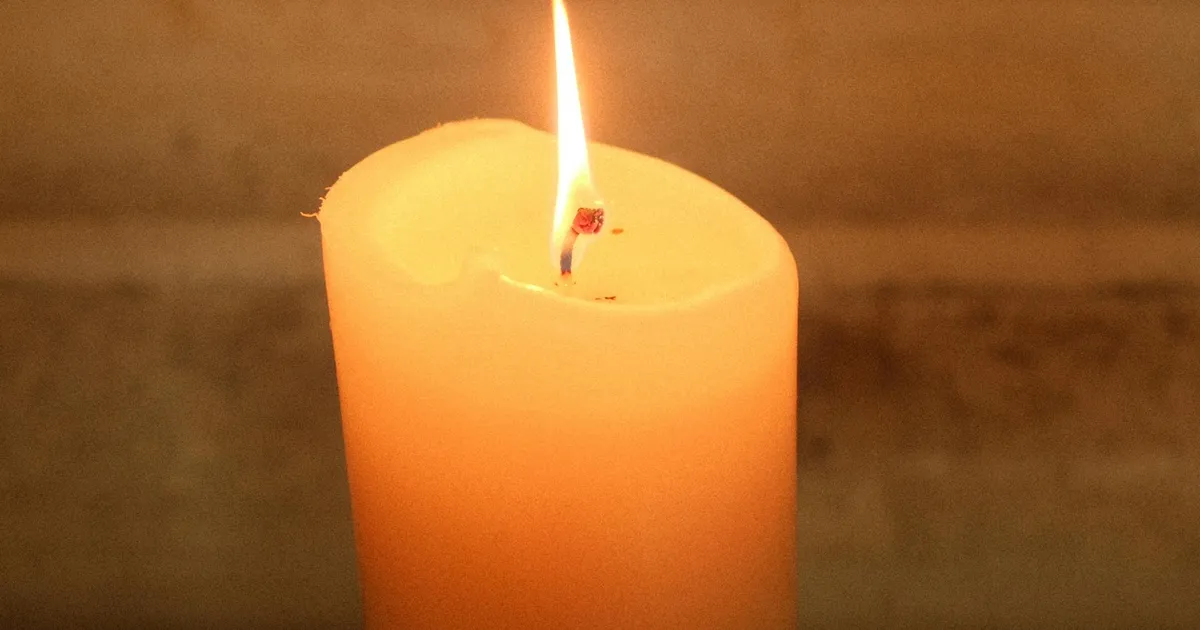
The candle is perhaps the most important symbol at a parastas. It is lit so its light can guide the soul of the departed. It is fixed into the main colac and burns throughout the memorial service. Candles made of pure beeswax are considered the most fitting in Orthodox tradition.
Wine (usually red) symbolises the blood of the Saviour and the sacrifice. It is taken to church in a bottle or a clean vessel and offered to the priest for a blessing. At the parastas meal, wine is traditionally served to all those present.
Prescura (or "anafura") is a special bread used during the Holy Liturgy. At a parastas, the prescura is taken to church together with a pomelnic (a list of the names of those being remembered) and represents the link between the pomana for the departed and the divine service.
Incense is burned at home or at the cemetery, and its smoke symbolises the prayers rising to heaven. Some families also burn incense in the house where the parastas meal is held.
List of elements needed for a complete parastas:
- Coliva (blessed at church)
- Colaci (at least 1, usually 3)
- A large candle (in the colac)
- Small candles (for participants)
- Red wine
- Prescura
- A pomelnic with the name of the person being remembered
- Pomana packages
- Fruit and sweets for the table
- Incense (optional, but traditional)
All these elements are prepared with care and with the departed person in mind. Tradition is not a checklist, but an act of love and respect.
Frequently Asked Questions (FAQ)
How many colaci are made for the 40-day parastas?
Traditionally, between 3 and 7 colaci are made for the 40-day parastas, depending on local custom and the advice of the parish priest. The 40-day parastas is considered the most important, because, according to Orthodox tradition, this is the day the soul receives its particular judgement. For this reason, many families prepare a larger parastas, with more colaci, more generous pomana packages, and a full meal for those present.
Can coliva be bought ready-made?
Yes, coliva can be bought ready-made from confectioners, traditional bakeries, or specialists within the community. Many parishes have contacts for people who prepare coliva to order. Bought coliva is just as valid from a religious standpoint — what matters is the blessing received at church, not who prepared it. Prices range from 50 to 200 lei, depending on size and the complexity of the decoration.
What goes into pomana packages at a parastas?
Pomana packages usually contain a colac (or a slice of colac), a portion of coliva, a candle, fruit, sweets and, traditionally, wine or red juice. At larger parastas services (40 days, 1 year), a towel, plate, glass, or even items of clothing may be added. Contents vary by region: in Moldova the packages are more generous, while in Muntenia the emphasis is on the parastas meal. What matters is giving with an open heart, not following a rigid rule.
Must coliva be made from wheat, or can it be made from barley groats?
Orthodox tradition calls for coliva made from wheat, since the symbolism of the wheat grain (death and resurrection) is central. However, in some regions and communities, coliva made from arpacaș (hulled barley) is also accepted, especially when wheat for coliva is hard to find. We recommend discussing this with your parish priest — in most cases, he will accept either version, provided it is prepared with devotion and good faith.
Summary
- Coliva is the central ritual dish at a parastas, based on boiled wheat that symbolises death and resurrection in Orthodox tradition.
- The traditional recipe uses boiled wheat, walnuts, sugar, breadcrumbs, and rum essence — preparation takes 3-4 hours, including soaking the wheat.
- Colaci are round loaves that symbolise continuity and eternity; usually 3 colaci are made, but the number varies from 1 to 7.
- Pomana packages contain colac, coliva, a candle, fruit, and sweets — contents differ between Moldova, Muntenia, Transylvania, and Banat.
- Other essential elements include the candle (for the light of the soul), red wine, prescura, and incense.
- Coliva must be blessed by the priest before it is shared.
- Coliva can be bought ready-made without losing its spiritual value.
- Traditions vary by region and from parish to parish — there is no single "correct" version. What matters is the intention behind everything that is prepared.
Related Articles
- The 40-Day Parastas — Traditions, Meaning, and Organisation
- The 9-Day Parastas — What to Do and What to Prepare
- Moșii and Ancestors' Saturday 2026 — Calendar and Traditions
- How to Organise a Funeral — Complete Guide
- What to Wear to a Funeral — Rules and Traditions
Preserve the Memory Forever
Create a digital memorial on Kinmory — add photographs, stories, and memories of your loved one. Relatives from anywhere in the world can visit the memory page and contribute their own precious moments.
Complement the tradition with a digital memorial →