Introduction
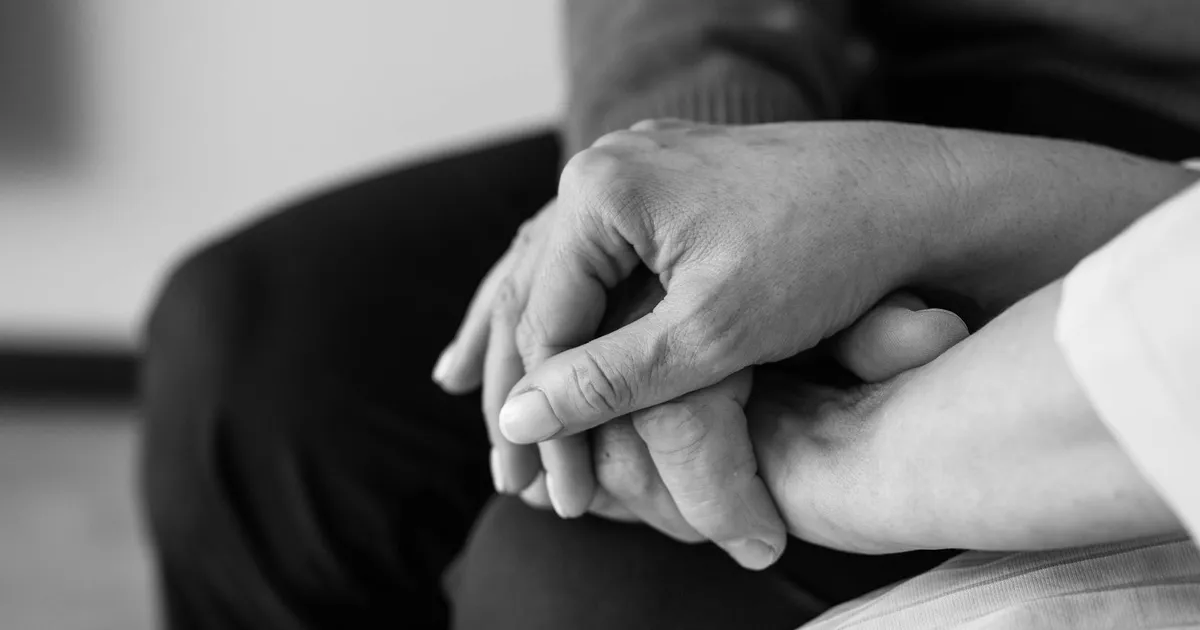
We understand that you are going through one of the most difficult periods of your life. The loss of a loved one brings not only immense pain, but also a series of decisions and formalities that must be resolved in a very short time. It is perfectly natural to feel overwhelmed — most people go through organizing a funeral for the first time in their lives and do not know where to begin.
This guide was created to be with you during these moments. We will explain, step by step, everything that needs to be done from the moment of death to the first memorial services (parastase): what documents you need, how to choose a funeral service company, how Orthodox, Catholic, or civil ceremonies proceed, and what follows after the funeral.
This guide covers the complete organization of a funeral in Romania — from the medical determination of death and obtaining the death certificate (certificat de deces), to the memorial meal after the funeral and the memorial service calendar. Whether you are in Bucharest, Cluj, Iasi, or a rural locality, the steps are largely the same, and we present everything clearly, chronologically, and without jargon.
You are not alone. Millions of families in Romania have gone through these stages and managed to offer a dignified farewell to their loved ones. With the right information, you will manage too.
What to do immediately after death
Immediately after death, the family must complete three essential steps: obtaining the medical determination of death, registering the death at the Civil Registry (Starea Civila) to receive the death certificate and burial permit, and contacting a funeral service company. These steps must be completed within the first 24 hours.
Medical determination of death
The first step is obtaining the medical death certificate (certificatul medical constatator al decesului). This is the document that officially confirms the death and is absolutely necessary for all subsequent steps.
- If death occurs in a hospital: the attending physician or on-call doctor completes the medical death certificate.
- If death occurs at home: call 112 or contact the family doctor. A doctor will come to the home to certify the death. Depending on the circumstances, police and forensic medical involvement may be necessary.
- Death by accident or in suspicious circumstances: the police and forensic medicine are mandatorily involved. The certificate is issued by the Institute of Forensic Medicine (Institutul de Medicina Legala).
The medical death certificate contains the diagnosis and cause of death. Without this document, you cannot obtain the death certificate from the Civil Registry.
Registration at the Civil Registry — death certificate and burial permit
After obtaining the medical determination, the family must present themselves at the Civil Registry Service (Serviciul de Stare Civila) in the locality where the death occurred. The legal deadline for declaring the death is 3 calendar days from the date of determination.
Documents required for death registration:
| Document | Where to obtain |
|---|---|
| Medical death certificate (certificatul medical constatator al decesului) | Doctor / hospital / Forensic Institute |
| Deceased's identity document (original) | Family |
| Deceased's birth certificate (if available) | Family |
| Identity document of the declarant | Family / person declaring |
| Marriage certificate (if applicable) | Family |
From the Civil Registry you will receive:
- Death certificate (certificat de deces) — the official document attesting the death
- Burial permit (adeverinta de inhumare or incinerare) — without this document, the funeral cannot take place
Consult our detailed guide on the death certificate and required documents for more information.
Contacting a funeral service company
After obtaining the documents, the next step is to contact a funeral service company (firma de servicii funerare). Choosing the right company is one of the most important decisions in the funeral organization process.
A trustworthy funeral service company will provide:
- Pickup and transport of the deceased from home, hospital, or the Forensic Institute
- Embalming and preparation (mandatory in certain cases stipulated by law)
- Coffin and funeral accessories
- Chapel placement (mortuary chapel)
- Ceremony organization (coordination with the priest, cemetery, music)
- Funeral transport to the church and cemetery
- Document assistance
For advice on choosing the right company, consult our article on how to choose a funeral service company.
Preparing the funeral — what happens in the first 24-48 hours
The actual preparation of the funeral includes embalming, placement in the chapel for the wake, and choosing the coffin and floral arrangements. The funeral service company coordinates these steps, but the family makes the main decisions regarding the ceremony and funeral items.
Embalming and preparation
Embalming (thanatopraxis) is mandatory by law in Romania in certain situations, according to Government Decision 741/2016: when the body is displayed in an open coffin in a chapel or public space, when transport exceeds 30 km from the place of death, or at the recommendation of the Public Health Directorate (DSP) for biosecurity reasons. In other cases, embalming is not mandatory, although most funeral companies recommend it. The process includes:
- Sanitization and preparation of the body
- Preservation using special substances (formaldehyde or modern solutions)
- Dressing — clothing the body in the clothes chosen by the family, discreet makeup
- Placement in the coffin
Embalming is performed by qualified personnel, usually at the funeral company's premises or at the mortuary chapel. The family does not participate in this process.
Chapel placement — the wake
After embalming, the deceased is placed in the mortuary chapel where family and close ones can come to say their farewells. This moment is called the wake (priveghi or priveghiu).
- In urban areas: placement is mandatory at the mortuary chapel (of the cemetery or funeral company)
- In rural areas: in certain localities, with compliance to sanitary regulations, a wake may be held at the family home
The wake usually lasts 1-2 days. In the Orthodox tradition, the family lights candles and reads prayers beside the coffin. Visitors bring flowers, funeral wreaths, and express their condolences.
Choosing the coffin, wreaths, and floral arrangements
Choosing the coffin is one of the practical decisions the family must make. Funeral service companies usually offer several categories:
| Coffin type | Material | Approximate price |
|---|---|---|
| Economy | Particle board / veneer | 800 — 1,500 lei |
| Standard | Solid wood (fir, pine) | 1,500 — 3,000 lei |
| Premium | Solid wood (oak, walnut) | 3,000 — 8,000 lei |
| Luxury | Precious wood, special finishes | 8,000+ lei |
In addition to the coffin, the family usually chooses:
- Funeral wreaths — bouquets or wreaths with ribbons and messages
- Cross or temporary monument — to mark the grave in the first months
- Clothing for the deceased — usually new clothes or their preferred outfit
For details on all costs involved, consult how much a funeral costs in Romania in 2026.
The funeral ceremony — Orthodox, Catholic, civil
The funeral ceremony in Romania can be Orthodox, Catholic, Protestant, or civil (secular). The most common is the Orthodox ceremony, but every family has the right to choose the form of funeral that corresponds to their beliefs. All options are equally dignified and valid.
Orthodox funeral service (the prohod)
The Orthodox funeral is the most widespread in Romania and follows a well-established ritual:
- Chapel service — the priest officiates prayers, hymns, and readings from the Holy Scriptures at the mortuary chapel
- The prohod — the main funeral service, which may be officiated at the church or the cemetery chapel. It lasts between 30 minutes and one hour
- Absolution (dezlegarea) — the priest reads the absolution prayer, through which the soul is released from earthly bonds
- Funeral procession (cortegiul funerar) — the procession from the church (or chapel) to the cemetery
- Lowering into the grave — the coffin is lowered into the ground, earth is thrown, flowers are placed
The family must contact the parish in advance to establish the date and time of the service. The priest will request the death certificate and, in some cases, proof of the deceased's Orthodox baptism.
Civil / secular funeral
For families who do not wish for a religious ceremony, the civil funeral is a fully legal and dignified alternative. Unfortunately, this option is less well known in Romania, although the number of families choosing it is growing.
A civil ceremony usually includes:
- Farewell speech — a close friend, family member, or master of ceremonies delivers a speech in memory of the deceased
- Moments of reflection — a minute of silence or the deceased's favorite music
- Flower tributes — family and close ones place flowers on the coffin
- Lowering into the grave — proceeds the same as in the religious version
A priest is not required for a civil funeral. The funeral service company can provide a master of ceremonies.
The funeral procession
The funeral procession (cortegiul funerar) accompanies the coffin from the ceremony venue to the cemetery. It can be:
- On foot — in small localities, the procession walks the route, with the cross at the front
- By hearse (dric) — in cities and for longer distances
- Combined — by hearse for the main distance and on foot for the final meters in the cemetery
In Romanian tradition, along the funeral procession route, stops at crossroads may be made for short prayers. Wheat or coins are thrown at intersections — a custom linked to the folk belief that the soul needs "bridges" to cross into the afterlife.
After the funeral — the memorial meal and first memorial services
After the funeral ceremony, the family organizes the memorial meal (pomana) and subsequently memorial services (parastase) at traditional intervals. These traditions serve a dual purpose: spiritual (prayers for the soul of the deceased) and social (bringing together family and community to support the bereaved).
The memorial meal after the funeral
Immediately after the funeral, the family offers a memorial meal (pomana). This is organized either at the family home, at a restaurant, or at the parish hall.
The traditional memorial meal menu includes:
- Coliva — prepared from boiled wheat, with sugar and walnuts, blessed by the priest
- Colaci — traditional round bread
- Traditional food — sour soup (ciorba), stuffed cabbage rolls (sarmale), roast meat, cozonac (sweet bread)
- Wine and water — symbolically "poured" for the soul of the deceased
At the memorial meal, packages with food, sweets, candles, and colaci are also usually given, which guests take home "for the soul of the deceased."
More and more families choose to complement traditions with a digital memorial on Kinmory — a page with photographs and memories accessible anytime from anywhere in the world, where relatives and friends can add their own messages and stories.
The memorial service calendar (3 days, 9 days, 40 days)
The memorial service (parastas) is a commemorative service for the deceased, officiated by the priest. According to Romanian Orthodox tradition, memorial services are held at precise intervals:
| Memorial service | When it takes place | Significance |
|---|---|---|
| At 3 days | 3 days from death | Symbolizes the Holy Trinity; first commemoration |
| At 9 days | 9 days from death | The nine orders of angels; prayer for the soul |
| At 40 days | 40 days from death | The most important memorial service; the moment of the soul's judgment |
| At 6 months | 6 months from death | Intermediate commemoration |
| At 1 year | 1 year from death | The first year of mourning concludes |
| Annually | On the date of death, each year | Annual commemoration |
In addition to these fixed dates, the deceased are also commemorated on Mosii (Ancestors' Saturdays / Sambetele Mortilor) — special days in the Orthodox calendar dedicated to commemorating all those who have passed.
For a complete guide on the memorial service tradition, consult our article on the 40-day memorial service and its significance.
Did you know? Modern families complement funeral traditions with digital memorials — an online page where photographs, life stories, and condolence messages are permanently preserved. Learn more on Kinmory.
Funeral organization checklist — table with all steps
Below you will find a chronological table with all the necessary steps for organizing a funeral in Romania. This checklist covers everything from the determination of death to the first memorial service and can be used as a practical reference throughout the process.
| No. | Step | Deadline | Who is responsible |
|---|---|---|---|
| 1 | Medical determination of death | Immediately | Doctor / 112 |
| 2 | Obtaining the medical death certificate | Immediately | Doctor / Forensic Institute |
| 3 | Declaring the death at the Civil Registry | Max. 3 days | Family |
| 4 | Obtaining the death certificate + burial permit | At the Civil Registry | Family |
| 5 | Contacting the funeral service company | First hours | Family |
| 6 | Embalming and preparation | First 24 hours | Funeral company |
| 7 | Choosing the coffin and arrangements | First 24 hours | Family + funeral company |
| 8 | Chapel placement (wake) | Day 1-2 | Funeral company |
| 9 | Contacting the priest / church | First 24 hours | Family |
| 10 | Reserving the burial plot at the cemetery | Before the funeral | Family / funeral company |
| 11 | Organizing the memorial meal (restaurant / at home) | Day of the funeral | Family |
| 12 | Funeral ceremony | Day 2-3 | Priest + funeral company |
| 13 | Burial at the cemetery | Day 2-3 | Funeral company + cemetery |
| 14 | Memorial meal after the funeral | Immediately after burial | Family |
| 15 | Memorial service at 3 days | 3 days from death | Priest + family |
| 16 | Memorial service at 9 days | 9 days from death | Priest + family |
| 17 | Memorial service at 40 days | 40 days from death | Priest + family |
| 18 | Applying for the funeral benefit | Max. 12 months | Family |
Do not forget that you can apply for the funeral benefit (ajutor de inmormantare) from the Pension House (Casa de Pensii) or from the employer. Consult our guide on the funeral benefit in 2026 to find out the amount, conditions, and required documents.
Frequently Asked Questions
How many days from death to funeral in Romania?
In Romania, the funeral usually takes place 2-3 days after death. The law stipulates a maximum interval of 36 hours from the official determination of death until burial or cremation (according to Government Decision 741/2016), with exceptions approved by health authorities. Generally, a minimum of 24 hours is observed (common practice, though not explicitly mandated by law). The funeral service company can help you meet the legal deadlines.
Is embalming mandatory in Romania?
Embalming (thanatopraxis) is mandatory in Romania only in certain situations stipulated by Government Decision 741/2016: when the body is displayed in a chapel or public space, when transport exceeds 30 km from the place of death, or at the recommendation of the Public Health Directorate (DSP) for biosecurity reasons. In other cases, embalming is not legally required, although most funeral companies recommend it and include it in standard packages.
Can the wake be held at home?
Current legislation in Romania restricts holding wakes at home in urban areas. Generally, the deceased must be placed in the mortuary chapel or cemetery chapel. In rural areas, under certain conditions, a wake may be held at the family home, in compliance with local sanitary regulations. Consult the funeral service company regarding your specific situation.
What documents are required for a funeral?
The required documents are: the medical death certificate (certificatul medical constatator al decesului, from the doctor or Forensic Institute), the deceased's identity document, the death certificate (certificat de deces) issued by the Civil Registry, and the burial permit (adeverinta de inhumare). The family must obtain these documents within the first 24 hours after death. The funeral service company can assist with the formalities.
How much does a funeral cost on average in Romania?
The average cost of a funeral in Romania ranges between 5,000 and 15,000 lei, depending on the location, type of ceremony, and services included. A basic package includes the coffin, embalming, transport, and paperwork. Additional costs may include the monument, wreaths, the memorial meal (pomana), and memorial services (parastase). Consult our cost guide for complete details.
Summary
- First hours: obtain the medical determination of death and contact a funeral service company — they will guide you through all the steps
- Civil Registry: declare the death within a maximum of 3 days and obtain the death certificate + burial permit
- Embalming is mandatory by law in certain situations (chapel display, transport over 30 km, Public Health Directorate recommendation); the funeral company can advise you
- The wake takes place at the mortuary chapel (in urban areas) or, under certain conditions, at the family home (in rural areas)
- The ceremony can be Orthodox, Catholic, Protestant, or civil — choose the form that corresponds to the family's beliefs
- The memorial meal (pomana) is organized immediately after the funeral; memorial services (parastase) are held at 3, 9, 40 days, 6 months, and 1 year
- The funeral benefit (ajutor de inmormantare) from the state can be requested within 12 months of the death
- You are not alone — the funeral service company, the priest, and the community are with you at every stage
- The approximate cost is 5,000 — 15,000 lei, with variations depending on location and options
Related Articles
- Death Certificate in Romania — How to Obtain It and What Documents You Need
- How Much Does a Funeral Cost in Romania in 2026 — Detailed Costs
- Funeral Benefit in 2026 — Amount, Conditions, and Documents
- How to Choose the Right Funeral Service Company
- What to Do in Case of Death — First Practical Steps
- The 40-Day Memorial Service — Significance and Traditions
Preserve Memories
Create a digital memorial on Kinmory — add photographs, stories, and memories of your loved one. Relatives and friends from around the world can contribute their own messages.
Create a digital memorial on Kinmory